Featured in the 2023 Google Economic Impact Report

Featured in the 2023 Google Economic Impact Report
You might notice a small yellow spot on your ceiling or a soft patch on your wall. These common drywall water damage signs often mean a leak is hiding where you cannot see it. Catching these problems early helps you avoid expensive repairs and mold growth in your home. Our team sees these issues often while working in homes across Durham and Raleigh.
Water moves quickly through gypsum board and can travel much further than the spot you see. Your own eyes are still the best tool for protecting your property. We help homeowners from Chapel Hill to Cary identify these marks before they turn into major headaches. Keeping your home dry and solid is the best way to maintain its value over time.
You might notice a small yellow or brown ring on your ceiling that looks like a coffee stain. These marks often start small but grow over time as the drywall absorbs more moisture. If you see multiple rings inside each other, it means the area has been wet and dry several times. This pattern is a clear signal that you have a hidden leak rather than a one time spill. Our team sees this often in homes across Durham and Raleigh. It is vital to catch these stains early before the gypsum board loses its strength.
Bubbling or peeling paint is another major warning sign that water is trapped behind the surface. When moisture gets between the drywall and the paint, it breaks the bond and causes the finish to lift. You might also see wallpaper starting to curl at the seams or walls that look slightly bulged. These physical changes mean the structure of the wall is already starting to break down. We recommend getting a professional inspection in Cary or Chapel Hill as soon as you see these shifts. Ignoring a swollen wall can lead to much larger repair bills and potential mold growth.
Water damage rarely stays in one spot because drywall acts like a sponge for liquid. Moisture can travel up to two feet away from the actual leak through a process called wicking. This makes it hard for homeowners to find the real source of the problem without the right tools. We help families in Apex and Morrisville identify if a spot is a simple fix or a sign of a bigger plumbing issue. Getting an expert opinion now helps you decide on the best path for a lasting repair. Taking action today keeps your home safe and prevents the damage from spreading further.
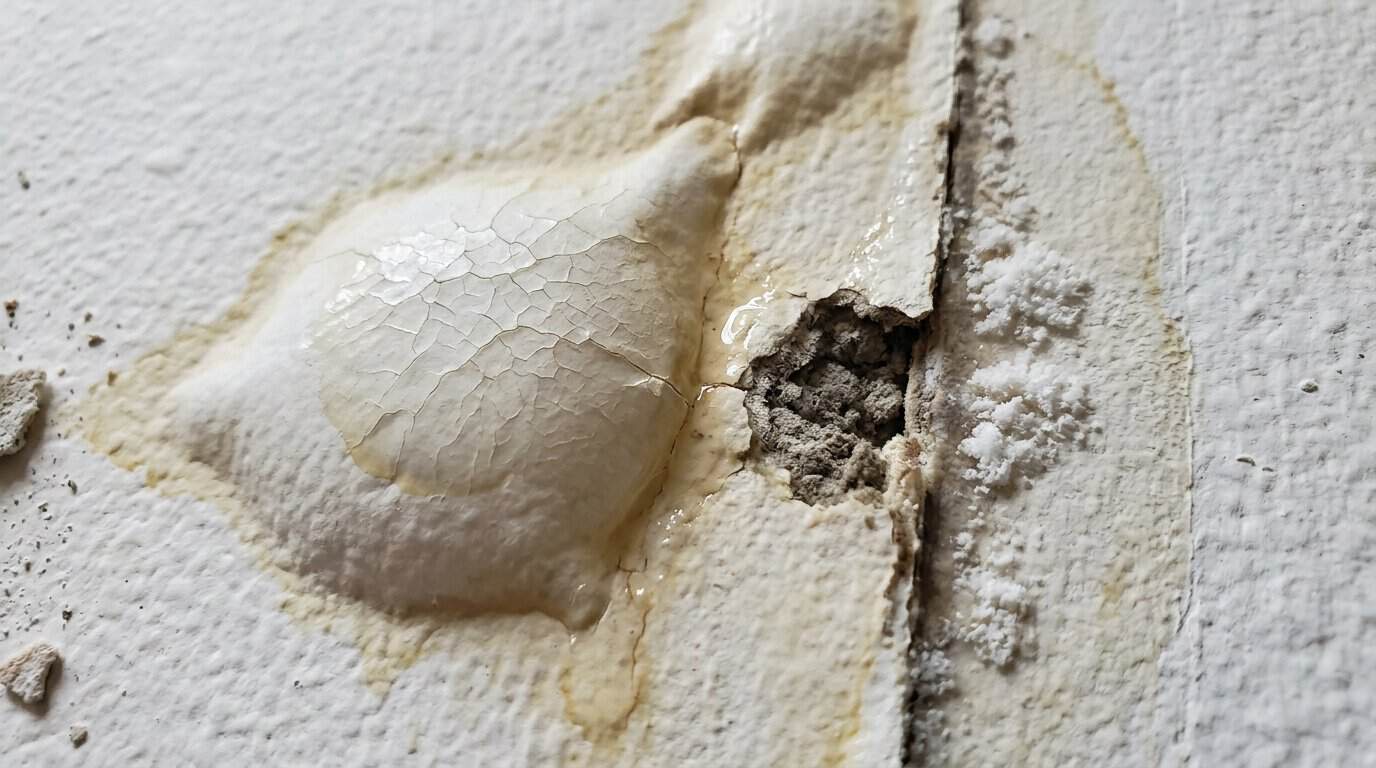
When you notice a change in your drywall texture, it is time to act quickly before the damage gets worse. You can check for soft spots by gently pressing your thumb against the discolored or bulging area. If the wall feels spongy or gives way easily, the gypsum core has already lost its structural integrity. This means the board is saturated and could collapse or fall from the ceiling at any moment. We see this often in Durham homes after a hidden pipe leak or heavy rain. It is much safer to catch this now than to wait for the material to crumble on its own.
A sagging ceiling is a serious warning sign that the drywall is too heavy with water to support its own weight. You can use a straight edge or a level to see if the board is dipping away from the joists. If you see the drywall pulling away from the screws, the integrity of the room is at risk. Our team helps homeowners across Raleigh and Chapel Hill identify these hazards before they become expensive emergencies. We look for these physical changes to help you decide if a simple patch will work or if a full replacement is necessary.
Testing the firmness of your walls helps you understand the true extent of the moisture problem. If the surface feels brittle or flakes off when you touch it, the paper backing has likely separated from the internal gypsum. This creates a perfect environment for mold to grow behind the scenes where you cannot see it. We serve neighbors in Cary and Apex who want to keep their homes sturdy and healthy. Identifying these soft spots early allows us to give you an accurate quote for a professional drywall repair. Taking care of these texture issues now prevents a small leak from turning into a major renovation project.
Sometimes your nose detects a problem before your eyes ever do. If you notice a damp, earthy scent in a room that stays dry, you likely have moisture trapped behind your walls. These musty odors are a major red flag that mold is starting to grow in the dark spaces between your studs. You should never ignore these smells even if the paint looks perfect. Our team often finds hidden leaks in Durham homes just by following these scents. Catching the issue now prevents a small leak from becoming a structural nightmare for your family.
Your monthly utility bills can also tell a story about the health of your drywall. An unexpected spike in your water bill often points to a pinhole leak hidden deep inside your wall cavity. Since drywall acts like a sponge, it will slowly soak up this water until the material becomes soft and heavy. You might notice your baseboards feel slightly damp or look a bit swollen near the floor. These subtle changes mean the gypsum board is losing its strength and needs a professional look. We help homeowners across Raleigh and Chapel Hill identify these invisible threats before they cause a ceiling collapse.
High humidity in the Triangle area can make these hidden issues much worse during the summer months. If you see your wallpaper peeling or paint bubbling without a clear cause, the structure of your home is likely compromised. A professional inspection is the best way to determine if you need a simple patch or a full replacement. We take pride in giving honest advice to our neighbors in Cary and Apex about the safety of their property. Addressing these red flags today keeps your home sturdy and your indoor air quality clean.
Catching those small stains or soft spots early saves you from much bigger headaches down the road. Water moves quickly through drywall and can cause the material to crumble or grow mold if left alone. You want to address these issues before they turn into a full ceiling replacement or a structural problem. Our team sees these situations often across Durham and Raleigh. We know how to find the source of the damage and make your walls look new again.
Taking care of your home is an investment that keeps your family safe and comfortable. We take pride in helping our neighbors in Cary, Apex, and Chapel Hill maintain their properties with high quality repairs. Waiting only makes the repair more expensive and difficult to manage. You can trust our experienced crew to handle every step of the process, including assistance with insurance claims for major damage. Discover how our services can help you fix these water damage signs and protect your home for years to come.
You will usually see a yellow or brown ring that looks like a coffee stain. If you see several rings inside each other, it means the area has been wet multiple times. This is a clear sign of a hidden leak that needs attention right away.
Paint bubbles when water gets prefix between the drywall and the finish. The moisture breaks the bond and causes the surface to lift or peel. Our team often sees this in homes around Raleigh and Durham when pipes are leaking behind the scenes.
Painting over a spot only hides the color but does not fix the problem. The moisture will continue to rot the gypsum board and could lead to mold growth. You must find the source of the leak and make sure the wall is dry before applying new paint.
Press gently on the area to see if it feels soft or spongy. If the wall looks bulged or the wallpaper is curling at the seams, the structure is breaking down. We help homeowners in Chapel Hill and Cary identify these soft spots before they become major repairs.
Water moves quickly through drywall and can travel far from the actual leak. Even a tiny spot can be a sign of a larger problem hiding in your ceiling or walls. It is best to catch these marks early to keep your home solid and maintain its value.
You should call a professional to inspect the area as soon as possible. Our team can help you find the damage and fix it properly. We serve communities from Apex to Wake Forest and can help you avoid expensive structural issues.
When you need interior painting services and exterior painting services, or other residential contracting services for roofing, siding, gutter, or drywall, call Gonzalez Painters & Contractors at (919) 477-6058 or contact us online. We have been serving the Triangle area since 2000, and are the name to trust for painting and home contracting services in Durham, Apex, Hillsborough, Chapel Hill, Cary, Raleigh, Carrboro, and other nearby locations.
© 2026 Gonzalez Painters & Contractors, Inc. | Better Business Bureau® Profile (bbb.org) | Web Design Provided By The Builders Agency.